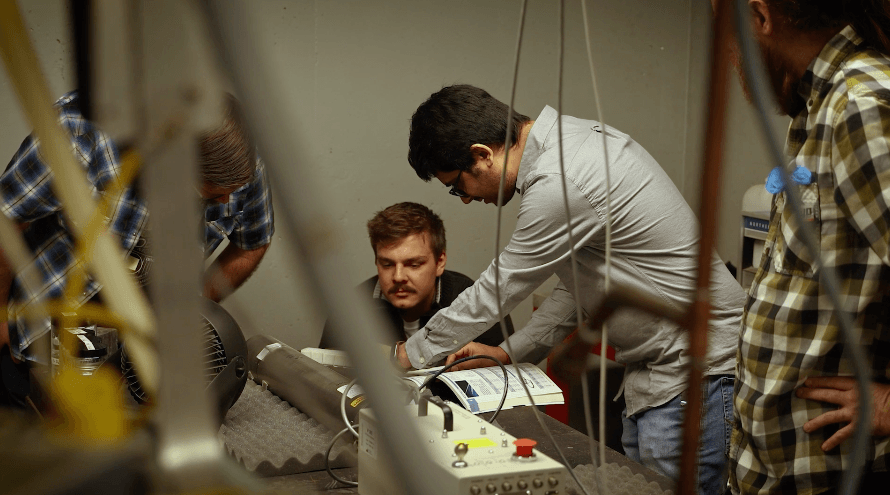
We are currently conducting several collaborative projects at Texas Tech University and several others with the University of Missouri Research Reactor (MURR). These involve experimentally determining the source of novel nuclear reactions within various metal hydrides. Simulations are conducted to estimate byproducts of the irradiated materials using known nuclear cross-sectional libraries, and are compared with experimental results.
Our experiments and simulations seek to determine whether nuclear polarization, nuclear excitation, and quantum population inversion in some nuclei can increase cross sections for nuclear reactions. If it is possible for lattice dynamics to influence nuclear dynamics in metals, then incoherent X-ray or gamma irradiation may make certain nuclear fission and fusion reactions easier to achieve.


Method
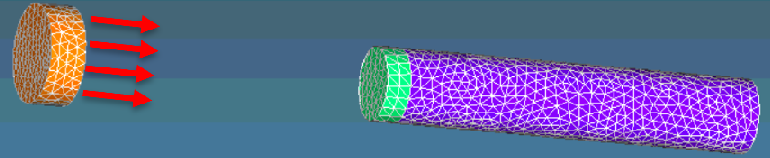
First, simulations are conducted by generating a solid mesh and specifying conditions that will be used in the actual experiment. Calculations are performed using the Texas Tech University High Performance Computing Center. Metal hydride systems are irradiated under various neutron and gamma environments to study specific variables.
After irradiation, materials are characterized for nuclear byproducts, such as tritium levels. Simulations are compared against experimental results.


MCNP input files from our publications are available on the Supplementary Data page. Simulation and modeling are also offered as a service.